Back in college, one of the topics in my classes (I'm a psychology major, by the way) that really got me interested was the Elisabeth Kübler-Ross model (of coping with dying). This is what most people would know as The 5 Stages of Grief.
The model was based on the interviews she conducted with her dying patients – those with terminal illnesses – and she came up with five stages to describe the emotional and psychological responses that most individuals go through when coping with it.
However, I have realized that the 5 stages of grief isn't only for people who are dying of terminal illness. It's also applicable for people who have "died" emotionally – those who have faced losing something or someone so dear to them, those going through a divorce, drug addiction, diagnosed with infertility, and so on.
The Five Stages of Grief, a.k.a. D-A-B-D-A is a very good tool in overcoming grief – and if you know how the process goes, you are more likely to overcome it sooner, avoiding a "relapse" to earlier stages –which obviously would make you go through the whole thing all over again.
D – Denial
photo courtesy of: http://www.kevscartoons.com/

The person refuses to face the situation with the fear of what will come next after that precise situation. The usual phrases they would tell themselves would be "I'm fine", "Everything's alright", and "This can't be happening to me – not me". However, soon, the person will be open to the reality of the situation.
A – Anger
photo courtesy of: http://www.burgertime.info/

This comes when the person's eyes are open to the realities of the situation and denial can no longer continue. This is a realization of the person's fear of what will come next, and so with fear, the defense reaction would be anger. The person will have thoughts of rage over the situation and will have thoughts of "Why me?!", "This is not fair!!!", "Who is to blame for all these???", and even "How can this happen to me??? Why???".
The person facing anger may not throw things around or curse at everything he or she sees – but they will be quite angry with themselves, the situation, and life itself.
B – Bargaining
photo courtesy of: http://i103.photobucket.com/

When the person keeps asking questions of anger and doesn't get any answers that they like, they turn to bargaining. It is the stage when the individual actually hopes to delay or change his or her situation. If the person is dying, they may hope to delay the day they die; and if a person is in a relationship wherein her husband is having an affair and might be leaving her for that other woman, that person hopes that her husband will change.
However, in this stage, the hopes of the person are negotiated with a higher power, in exchange for a transformed lifestyle. So the person may go on with phrases like "I will do (good or charitable deeds) if...", "I will give up my bad habits just to have...", and phrases of that sort.
D – Depression
photo courtesy of: http://spktruth2power.files.wordpress.com/

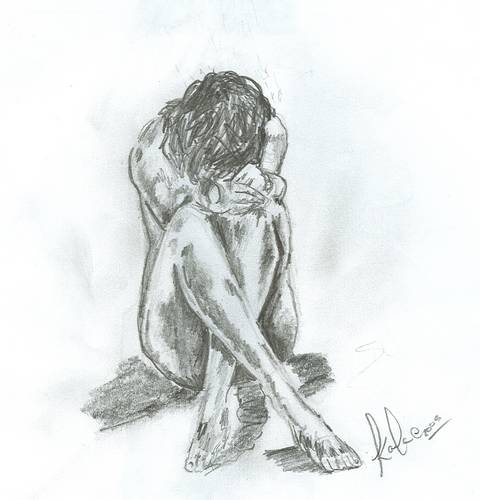
This stage then comes when the person realizes that a bargain, even with a higher power cannot change his or her situation at all. The feelings of hope are washed away, leaving a hollow feeling of emptiness and hopelessness to the individual.
This is the time that the person understands that what must be, will be. So they may shy away from the world, keep silent, avoiding other people, and spend much time crying and grieving – even going into self-pity. This is the time they would have thoughts like "I'm so sad... why even bother?", "I really miss my loved one... why go on?", or "He left me for someone else... I'm not worth loving, so why bother?", and so on.
A – Acceptance
photo courtesy of: http://imperfectaction.com/

This is the best part of the five stages – acceptance. This is the time that the person finally gets out of depression and realizes that there is a life out there – a beautiful life out there for them. They may go on with empowering thoughts like "I can't fight it, so I might as well prepare for it", or "It's okay, I'm okay, everything will start to be okay".
So live life to the fullest – you've got only one, so make the best out of it. J